


Molds are essential tools in various manufacturing industries, from automotive and aerospace to consumer goods and medical products. The fatigue resistance of molds directly impacts their service life, production efficiency, and the quality of the final products. As a leading supplier of Mold PVD Coating Machines, I am excited to share how our advanced technology can significantly improve the fatigue resistance of molds.
Understanding Mold Fatigue
Mold fatigue is a common problem that occurs due to repeated cyclic loading during the molding process. This can lead to the initiation and propagation of cracks, surface wear, and ultimately, mold failure. Factors such as high temperature, high pressure, and the type of material being molded can exacerbate the fatigue process. When a mold fails, it not only disrupts production but also incurs significant costs for repair or replacement.
How PVD Coating Works
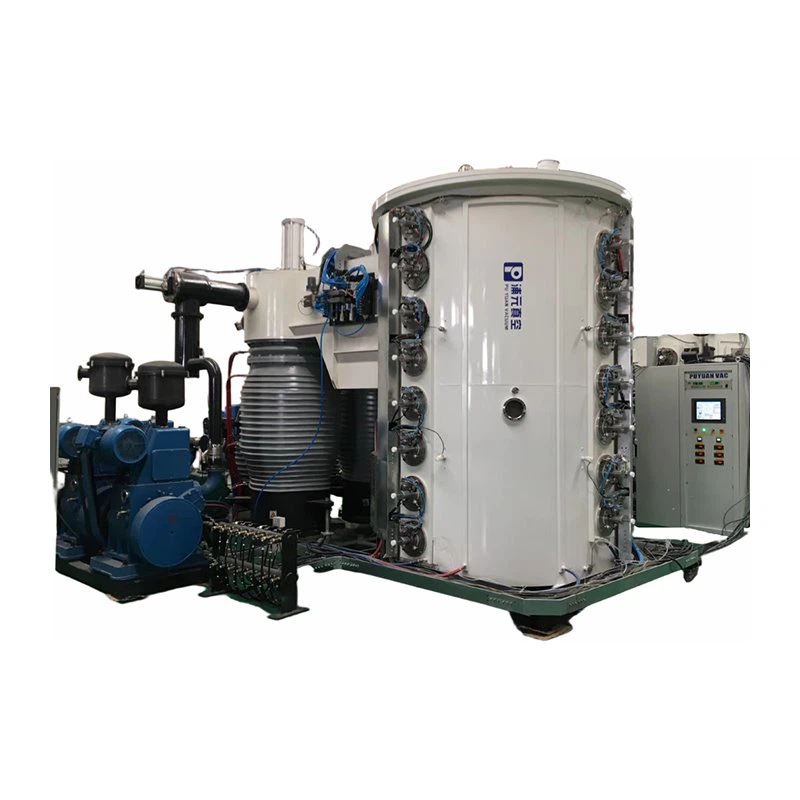
Physical Vapor Deposition (PVD) is a thin - film coating process that involves the deposition of a thin layer of material onto the surface of a substrate, in this case, the mold. In a PVD coating process, the coating material is vaporized in a vacuum chamber and then condensed onto the mold surface. The resulting coating is typically a few micrometers thick but can have a profound impact on the mold's properties.
Our Mold PVD Coating Machines are designed to provide precise control over the coating process. We can deposit a variety of coating materials, such as titanium nitride (TiN), titanium carbonitride (TiCN), and chromium nitride (CrN), each with its own unique properties. These coatings form a hard, wear - resistant layer on the mold surface, which helps to protect it from the harsh conditions of the molding process.
Improving Fatigue Resistance through PVD Coating
1. Hardness and Wear Resistance
One of the primary ways PVD coatings improve fatigue resistance is by increasing the hardness of the mold surface. A harder surface is more resistant to wear and abrasion, which reduces the likelihood of surface damage during the molding process. For example, TiN coatings have a high hardness value, which can withstand the high - pressure and high - temperature conditions in injection molding. This means that the mold can maintain its shape and dimensional accuracy over a longer period, reducing the risk of fatigue failure.
2. Friction Reduction
PVD coatings can also reduce the friction between the mold and the molded material. Lower friction means less stress on the mold surface during the ejection process. When a part is ejected from the mold, high friction can cause shear stresses on the mold surface, which can contribute to fatigue cracking. Our coatings act as a lubricating layer, allowing for smoother ejection and reducing the cyclic stress on the mold.
3. Corrosion Resistance
In many molding processes, the mold may come into contact with corrosive materials or environments. Corrosion can weaken the mold structure and accelerate the fatigue process. PVD coatings provide a barrier against corrosion, protecting the underlying mold material. For instance, CrN coatings have excellent corrosion resistance, making them suitable for molds used in the production of medical products or in harsh chemical environments.

4. Thermal Stability
High - temperature cycling is a common cause of mold fatigue. PVD coatings can improve the thermal stability of the mold. Some coatings have low thermal conductivity, which helps to insulate the mold from the heat generated during the molding process. This reduces the thermal stress on the mold, preventing thermal fatigue cracking.
Applications of Mold PVD Coating Machines
Our Mold PVD Coating Machines have a wide range of applications across different industries.
Medical Product PVD Coating Machine
In the medical industry, precision and cleanliness are of utmost importance. Our Medical Product PVD Coating Machine can be used to coat molds for medical devices and implants. The coatings improve the fatigue resistance of the molds, ensuring consistent production of high - quality medical products. The corrosion - resistant coatings also help to maintain the sterility of the molds, which is crucial in medical manufacturing.
Jewelry PVD Coating Machine
The jewelry industry requires molds that can produce intricate and detailed designs. Our Jewelry PVD Coating Machine can coat molds with hard and wear - resistant coatings, allowing for the production of high - quality jewelry pieces. The improved fatigue resistance of the molds means that they can be used for a longer time, reducing production costs.
PVD Coating Machine for Furniture
In the furniture industry, molds are used to produce various components. Our PVD Coating Machine for Furniture can coat molds used in the production of plastic or wooden furniture parts. The coatings enhance the fatigue resistance of the molds, enabling more efficient and cost - effective production.
Case Studies
Let's take a look at some real - world examples of how our Mold PVD Coating Machines have improved the fatigue resistance of molds.
In an automotive manufacturing company, they were using uncoated molds for the production of plastic interior parts. The molds were experiencing frequent fatigue failures, which led to production downtime and increased costs. After applying a TiCN coating using our PVD Coating Machine, the fatigue life of the molds increased by over 300%. The coating provided excellent wear resistance and reduced friction, allowing the molds to withstand the high - volume production process.
In a medical device manufacturing plant, they were facing issues with mold corrosion and fatigue in the production of surgical instruments. By using a CrN coating from our machine, the molds became more resistant to corrosion and fatigue. This not only extended the mold life but also improved the quality of the medical devices, ensuring better patient safety.
Conclusion
In conclusion, our Mold PVD Coating Machines offer a reliable solution for improving the fatigue resistance of molds. Through the deposition of high - quality PVD coatings, we can enhance the hardness, wear resistance, friction reduction, corrosion resistance, and thermal stability of molds. This results in longer mold life, reduced production costs, and improved product quality.
If you are looking to improve the performance of your molds and increase their fatigue resistance, we invite you to contact us for a detailed discussion. Our team of experts can help you select the most suitable coating material and process for your specific application. Whether you are in the medical, jewelry, furniture, or any other industry, our Mold PVD Coating Machines can provide the solution you need.
References
- Bunshah, R. F. (Ed.). (1994). Handbook of hard coatings: deposition technologies, properties, and applications. Noyes Publications.
- Arnell, R. D. (2009). PVD coatings in cutting tool applications. Surface and Coatings Technology, 203(24), 3883 - 3893.
- Holmberg, K., & Matthews, A. (2009). Coatings tribology: properties, mechanisms, techniques, and applications. Elsevier.


