


Controlling the deposition angle in a Vacuum Metalizer is a crucial aspect when it comes to achieving high - quality metal coatings for various applications. As a Vacuum Metalizer supplier, I've dealt with numerous clients facing challenges in this area. In this blog, I'll share some practical tips and insights on how to effectively control the deposition angle.
First off, let's understand why controlling the deposition angle matters. The deposition angle affects the morphology, density, and adhesion of the metal coating. A well - controlled deposition angle can result in a uniform and smooth coating, which is essential for applications like Auto Parts Vacuum Metallizing Machine and Auto Lamp Vacuum Metallizing Machine. For instance, in auto parts, a proper deposition angle ensures better corrosion resistance and aesthetic appeal.
One of the key factors in controlling the deposition angle is the source - substrate geometry. The relative position between the evaporation source (where the metal is vaporized) and the substrate (the object being coated) plays a huge role. If the source is too close or too far from the substrate, or if the angle between them is off, it can lead to uneven deposition.
To adjust the source - substrate geometry, most modern Vacuum Metalizer systems come with adjustable fixtures. You can move the substrate holder or the evaporation source to change the distance and angle. For example, if you want a more perpendicular deposition angle, you can position the substrate directly above the evaporation source. But keep in mind that this might not be suitable for all types of parts. Some complex - shaped auto parts may require a more oblique deposition angle to ensure all surfaces are coated evenly.
Another important aspect is the use of masks. Masks are physical barriers that can be placed between the evaporation source and the substrate. They can block the metal vapor from reaching certain areas of the substrate, effectively controlling where the metal is deposited and at what angle. For example, if you have a part with a specific pattern that you want to coat, you can design a mask with holes or cut - outs in the shape of that pattern. The metal vapor will pass through the holes and deposit on the substrate at an angle determined by the position of the mask and the source.
The type of evaporation source also affects the deposition angle. There are different types of evaporation sources, such as resistive evaporation sources and electron - beam evaporation sources. Resistive evaporation sources heat the metal to its vaporization point using an electric current. They usually have a more isotropic vapor emission, which means the metal vapor spreads out in all directions. This can make it a bit more challenging to control the deposition angle precisely.
On the other hand, electron - beam evaporation sources use a focused electron beam to heat the metal. They can provide a more directional vapor emission, which gives you better control over the deposition angle. However, electron - beam evaporation sources are more expensive and require more maintenance.
The vacuum environment itself can also influence the deposition angle. In a high - vacuum environment, the mean free path of the metal vapor atoms is long, which means they can travel relatively far without colliding with other molecules. This allows for a more direct deposition from the source to the substrate. But if the vacuum is not high enough, the metal vapor atoms will collide with other gas molecules in the chamber, causing them to scatter and changing the deposition angle.
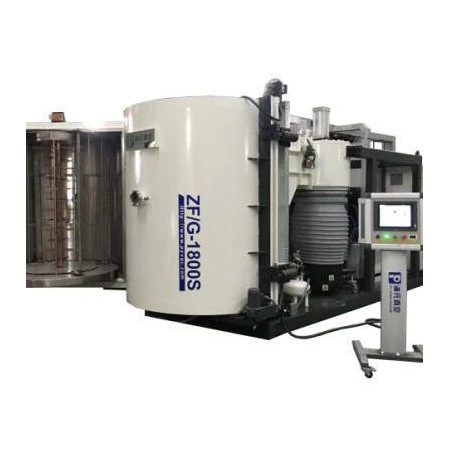

To maintain a high - quality vacuum, regular maintenance of the vacuum pump is essential. You should also make sure to clean the vacuum chamber regularly to remove any contaminants that could affect the vacuum level.
Monitoring and feedback systems are also very useful in controlling the deposition angle. Many modern Vacuum Metalizer systems are equipped with sensors that can measure the thickness and uniformity of the coating in real - time. By analyzing this data, you can adjust the source - substrate geometry, the evaporation rate, or other parameters to achieve the desired deposition angle.
For example, if the sensor detects that the coating is thicker on one side of the substrate than the other, you can adjust the angle of the substrate holder to correct the deposition angle. Some advanced systems even have automated feedback loops that can make these adjustments automatically, saving you time and effort.
In addition to these technical aspects, operator training is also crucial. A well - trained operator can understand the principles of deposition angle control and make the necessary adjustments quickly and accurately. They should be familiar with the operation of the Vacuum Metalizer, including how to adjust the source - substrate geometry, use masks, and monitor the vacuum environment.
We offer comprehensive training programs for our clients who purchase our Vacuum Metalizer systems. Our training includes both theoretical knowledge and hands - on practice, so that operators can gain the skills they need to control the deposition angle effectively.
In conclusion, controlling the deposition angle in a Vacuum Metalizer is a multi - faceted process that involves adjusting the source - substrate geometry, using masks, choosing the right evaporation source, maintaining a high - quality vacuum, and using monitoring and feedback systems. By paying attention to these factors and having well - trained operators, you can achieve high - quality metal coatings with precise deposition angles.
If you're in the market for a reliable Vacuum Metalizer or need more information on deposition angle control, don't hesitate to reach out. We're here to help you find the best solutions for your coating needs. Whether you're working on auto parts, auto lamps, or other products, we have the expertise and equipment to meet your requirements. Let's start a conversation and see how we can work together to improve your coating processes.
References
- "Vacuum Deposition onto Webs, Films and Foils" by P. Martin
- "Thin Film Processes II" edited by J. L. Vossen and W. Kern


