


As a supplier of Mold PVD Coating Machines, I've had the privilege of witnessing the transformative power of this technology in various industries. Physical Vapor Deposition (PVD) coating is a process that enhances the surface properties of molds by depositing a thin, durable layer of material. This process not only improves the mold's performance but also extends its lifespan. However, like any technology, Mold PVD Coating Machines come with their own set of challenges. In this blog post, I'll discuss some of the common problems faced by users of these machines and offer practical solutions.
Common Problems with Mold PVD Coating Machines
1. Coating Adhesion Issues
One of the most prevalent problems in PVD coating is poor adhesion between the coating and the mold surface. This can lead to coating delamination, where the coating peels off prematurely, reducing the effectiveness of the treatment. There are several factors that can contribute to adhesion problems, including improper surface preparation, contamination, and incorrect process parameters.
Surface preparation is crucial for ensuring good adhesion. If the mold surface is not clean or has a rough finish, the coating may not bond properly. Contamination from oils, greases, or other foreign substances can also prevent the coating from adhering to the surface. Additionally, if the process parameters, such as temperature, pressure, or deposition rate, are not optimized, the coating may not form a strong bond with the mold.
2. Coating Uniformity
Achieving uniform coating thickness across the entire surface of the mold is another challenge. Non-uniform coatings can result in inconsistent performance, with some areas of the mold having better wear resistance or release properties than others. This can lead to uneven wear and tear on the mold, reducing its overall lifespan.
Several factors can affect coating uniformity, including the design of the coating chamber, the position of the target material, and the movement of the mold during the coating process. If the coating chamber is not properly designed, the coating material may not be distributed evenly. Similarly, if the target material is not positioned correctly, the coating may be thicker in some areas than others. Finally, if the mold does not move in a consistent manner during the coating process, the coating may be applied unevenly.
3. Equipment Maintenance and Downtime
Mold PVD Coating Machines are complex pieces of equipment that require regular maintenance to ensure optimal performance. However, maintenance can be time-consuming and costly, and unexpected breakdowns can result in significant downtime. This can disrupt production schedules and lead to lost revenue.
Common maintenance issues include the replacement of worn-out components, such as targets, cathodes, and heaters, as well as the cleaning and calibration of the equipment. If these maintenance tasks are not performed regularly, the machine may not operate efficiently, and the quality of the coatings may be compromised.
4. Environmental and Safety Concerns
PVD coating processes often involve the use of hazardous materials, such as metals, gases, and chemicals. These materials can pose a risk to the environment and the health of workers if not handled properly. Additionally, the high temperatures and vacuum conditions used in the coating process can create safety hazards.
To address these concerns, it is important to implement proper safety protocols and environmental management practices. This includes providing workers with appropriate personal protective equipment (PPE), ensuring proper ventilation in the coating area, and disposing of hazardous waste in accordance with local regulations.
Solutions to Common Problems
1. Improving Coating Adhesion
To improve coating adhesion, it is essential to ensure proper surface preparation. This includes cleaning the mold surface thoroughly to remove any contaminants and roughening the surface if necessary to improve the mechanical interlocking between the coating and the mold. Additionally, optimizing the process parameters, such as temperature, pressure, and deposition rate, can help to ensure a strong bond between the coating and the mold.
Another solution is to use an intermediate layer, such as a bonding layer or an adhesion promoter, to improve the adhesion between the coating and the mold. These layers can help to bridge the gap between the coating and the mold surface, providing a stronger bond.
2. Achieving Coating Uniformity
To achieve uniform coating thickness, it is important to design the coating chamber and the target material positioning carefully. This may involve using multiple targets or a rotating target to ensure even distribution of the coating material. Additionally, using a computer-controlled motion system to move the mold during the coating process can help to ensure consistent coating application.
Regular monitoring and adjustment of the process parameters, such as the deposition rate and the gas flow rate, can also help to maintain coating uniformity. By using in-situ monitoring techniques, such as optical emission spectroscopy or ellipsometry, it is possible to detect any variations in the coating thickness and make adjustments in real-time.
3. Minimizing Equipment Maintenance and Downtime
To minimize equipment maintenance and downtime, it is important to implement a preventive maintenance program. This includes regular inspections, cleaning, and calibration of the equipment, as well as the replacement of worn-out components before they fail. By following a preventive maintenance schedule, it is possible to identify and address potential problems before they cause significant downtime.
Additionally, investing in high-quality equipment and components can help to reduce the frequency of maintenance and breakdowns. Choosing a reputable supplier who offers reliable equipment and excellent after-sales support can also ensure that any issues are resolved quickly and efficiently.
4. Addressing Environmental and Safety Concerns
To address environmental and safety concerns, it is important to implement proper safety protocols and environmental management practices. This includes providing workers with appropriate PPE, such as gloves, goggles, and respirators, and ensuring proper ventilation in the coating area. Additionally, it is important to dispose of hazardous waste in accordance with local regulations.
Using environmentally friendly materials and processes can also help to reduce the environmental impact of the coating process. For example, some PVD coating machines use water-based or solvent-free coatings, which are less harmful to the environment than traditional coatings.
Other Types of PVD Coating Machines
In addition to Mold PVD Coating Machines, we also offer a range of other PVD coating machines, including ITO Glass Coating Machine, Rainbow Color PVD Coating Machine, and Ceramic PVD Coating Machine. These machines are designed to meet the specific needs of different industries and applications.
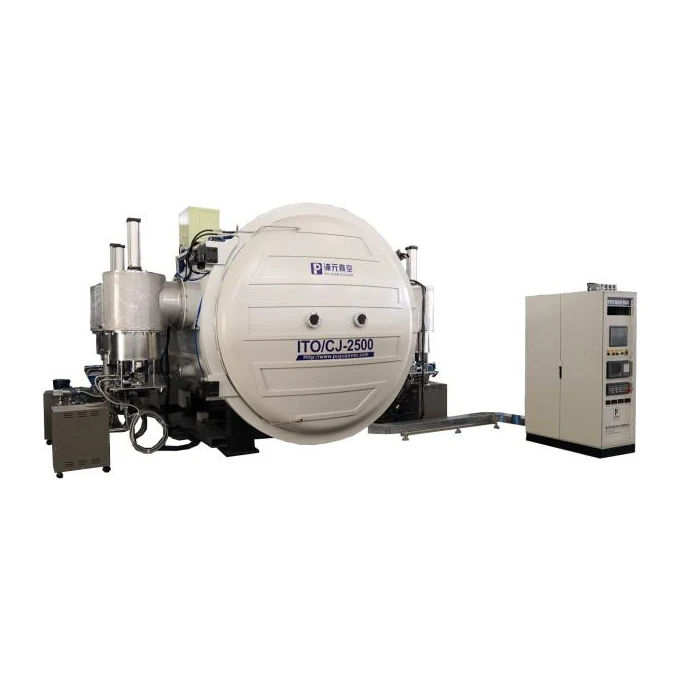

The ITO Glass Coating Machine is used to deposit indium tin oxide (ITO) coatings on glass substrates. ITO coatings are widely used in the electronics industry for applications such as touch screens, displays, and solar cells. The Rainbow Color PVD Coating Machine is used to create colorful coatings on various substrates, including metals, plastics, and ceramics. These coatings are often used for decorative purposes in the jewelry, automotive, and consumer electronics industries. The Ceramic PVD Coating Machine is used to deposit ceramic coatings on molds and other components. Ceramic coatings offer excellent wear resistance, corrosion resistance, and thermal stability, making them ideal for applications in the aerospace, automotive, and tooling industries.
Conclusion
Mold PVD Coating Machines offer many benefits, including improved mold performance, extended lifespan, and enhanced product quality. However, like any technology, they come with their own set of challenges. By understanding the common problems and implementing the appropriate solutions, it is possible to overcome these challenges and achieve optimal results.
If you are interested in learning more about our Mold PVD Coating Machines or any of our other PVD coating machines, please feel free to contact us. Our team of experts is available to answer your questions and provide you with more information about our products and services. We look forward to the opportunity to work with you and help you achieve your coating goals.
References
- "Physical Vapor Deposition (PVD) Coatings: Principles, Techniques, and Applications" by John A. Thornton
- "Handbook of Physical Vapor Deposition (PVD) Processing" by David M. Mattox
- "PVD Coating Technology: Principles and Applications" by Wolfgang Tillmann and Christian Leyens


