


Hey there! I'm a supplier of Ceramics PVD Coating Machines, and today I want to talk about one of the key aspects of coatings applied by these machines: coating porosity.
So, what exactly is coating porosity? Well, in simple terms, coating porosity refers to the presence of tiny holes or pores in a coating layer. It's like having a bunch of little tunnels or gaps within the coating. This might not sound like a big deal at first, but it can actually have a significant impact on the performance and quality of the coated product.
When we use a Ceramics PVD Coating Machine to apply a coating, we expect it to provide a smooth, continuous, and protective layer. However, achieving a completely non - porous coating is extremely challenging, if not impossible. There are several factors that can contribute to the formation of porosity in the coating.
One of the main factors is the deposition process itself. In PVD (Physical Vapor Deposition), materials are vaporized and then deposited onto a substrate. During this process, if the vaporized particles don't land and bond perfectly with the substrate or with each other, it can lead to the formation of pores. For example, if the deposition rate is too high, the particles may not have enough time to arrange themselves properly, resulting in a more porous coating.
The surface condition of the substrate also plays a crucial role. If the substrate has rough spots, contaminants, or micro - cracks, it can affect how the coating adheres and forms. These irregularities on the substrate surface can act as nucleation sites for pore formation. For instance, dirt or oil on the substrate can prevent the coating from bonding well, leaving gaps that turn into pores.
Another factor is the composition of the coating material. Different ceramic materials have different properties, and some may be more prone to porosity than others. For example, certain ceramic compounds may have a higher tendency to form voids during the deposition process due to their crystal structure or thermal expansion characteristics.
Now, let's talk about why coating porosity matters. First of all, porosity can significantly affect the corrosion resistance of the coated product. Pores act as pathways for corrosive agents, such as moisture and oxygen, to reach the substrate. Once these agents reach the substrate, they can start to corrode it, causing damage to the product over time. This is a big problem, especially in applications where corrosion resistance is crucial, like in the automotive or aerospace industries.
Porosity can also impact the mechanical properties of the coating. A porous coating is generally weaker and less wear - resistant than a dense, non - porous one. The pores can act as stress concentrators, making the coating more likely to crack or delaminate under mechanical stress. This is a major concern in applications where the coated product is subjected to high levels of friction, such as in cutting tools or engine components.
In addition, coating porosity can affect the aesthetic appearance of the product. A porous coating may look uneven or have a dull finish, which is not desirable in applications where appearance is important, like in jewelry or decorative items.
As a supplier of Ceramics PVD Coating Machines, we're constantly working on ways to reduce coating porosity. We've developed advanced control systems that allow us to precisely adjust the deposition parameters, such as the deposition rate, temperature, and gas flow. By optimizing these parameters, we can minimize the formation of pores and produce coatings with better quality.

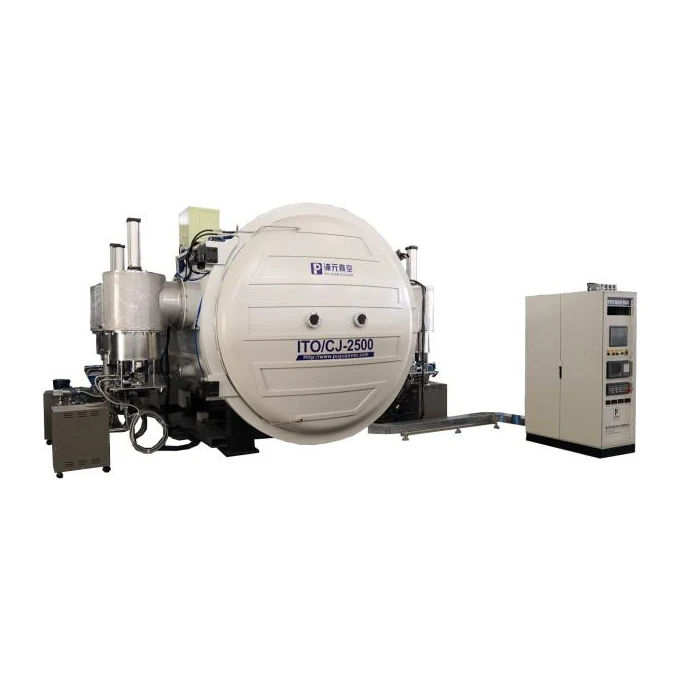
We also offer pre - treatment processes for the substrates to ensure a clean and smooth surface. This includes cleaning, polishing, and etching, which help to remove contaminants and improve the adhesion of the coating. By starting with a high - quality substrate, we can reduce the likelihood of pore formation during the coating process.
If you're in the market for a PVD coating machine, we have a range of options to suit your needs. For example, our ITO Glass Coating Machine is specifically designed for coating glass with indium tin oxide (ITO), which is widely used in touchscreens and solar panels. Our Tableware PVD Coating Machine is great for adding a decorative and protective coating to tableware, giving it a more luxurious look. And our Gold Coating Machine can be used to apply a beautiful and durable gold - like coating to various products.
If you're interested in learning more about our Ceramics PVD Coating Machines or have any questions about coating porosity, don't hesitate to get in touch. We're here to help you find the best solution for your coating needs. Whether you're a small business looking to enhance your product line or a large - scale manufacturer aiming to improve the quality of your coatings, we've got the expertise and the machines to make it happen.
In conclusion, coating porosity is an important factor to consider when using a Ceramics PVD Coating Machine. By understanding its causes and effects, and by using advanced technology and processes, we can minimize porosity and produce high - quality coatings. So, if you're ready to take your coating applications to the next level, give us a shout and let's start a conversation.
References
- Smith, J. (2018). "Advances in PVD Coating Technology". Journal of Surface Engineering.
- Johnson, A. (2019). "The Impact of Coating Porosity on Corrosion Resistance". Materials Science Review.


