


Hey there! As a supplier of Vacuum Metalizers, I've seen firsthand how crucial it is to control the substrate rotation in these machines. In this blog, I'll share some insights on how to achieve that effectively.
First things first, let's understand why substrate rotation matters. When you're using a Vacuum Metalizer, you're depositing a thin layer of metal onto a substrate. This process needs to be as uniform as possible to ensure a high - quality finish. Substrate rotation helps in achieving this uniformity by exposing all parts of the substrate to the metal vapor evenly.
Now, let's talk about the different ways to control substrate rotation. One of the most common methods is using a motor - driven system. Most modern Vacuum Metalizers come equipped with motors that can be precisely controlled. You can adjust the speed of rotation according to your specific requirements. For example, if you're working with a delicate substrate, you might want to set a slower rotation speed to avoid any damage. On the other hand, for a more robust substrate, a higher speed could be used to speed up the metallization process.
Another important aspect is the type of motor. There are different types available, such as DC motors and stepper motors. DC motors are relatively simple and cost - effective. They offer a smooth and continuous rotation, which is great for many applications. However, they might not provide the same level of precision as stepper motors. Stepper motors, on the other hand, can be controlled in discrete steps. This allows for very accurate positioning and speed control. They're ideal when you need a high degree of precision in your substrate rotation, like in some high - end optical or electronic applications.
When it comes to setting up the motor for substrate rotation, you need to consider the load. The substrate and its holder add weight to the rotation system. If the load is too heavy for the motor, it can cause issues like overheating or inconsistent rotation. So, it's important to choose a motor with the right torque capacity. You can calculate the required torque based on the weight of the substrate, the radius of rotation, and the desired acceleration.
In addition to the motor, the transmission system also plays a key role in controlling substrate rotation. The most common transmission methods include belts, chains, and gears. Belts are quiet and offer a certain degree of flexibility. They can absorb some shock and vibration, which is beneficial for the overall stability of the rotation. Chains, on the other hand, are more durable and can handle higher loads. They're often used in industrial - grade Vacuum Metalizers. Gears provide a very precise and efficient way of transmitting power. They can ensure a constant speed ratio between the motor and the substrate holder.
Now, let's look at some practical tips for fine - tuning the substrate rotation. One thing you can do is to use sensors. There are various types of sensors available, such as optical sensors and proximity sensors. Optical sensors can detect the position of the substrate by using light. They can provide feedback to the control system, allowing for real - time adjustments to the rotation speed. Proximity sensors can detect the presence or absence of an object in a certain area. They can be used to ensure that the substrate is properly positioned before starting the rotation.
Another tip is to use a programmable logic controller (PLC). A PLC is a computer - based control system that can be programmed to perform specific tasks. You can program it to control the motor speed, start and stop the rotation at specific times, and even adjust the rotation based on other parameters like temperature or pressure inside the vacuum chamber. This level of automation can greatly improve the efficiency and consistency of the metallization process.
Let's also consider the impact of the vacuum environment on substrate rotation. In a vacuum, there's no air resistance, which means that the motor doesn't have to work as hard to maintain the rotation. However, the lack of air also means that there's no natural cooling. This can cause the motor to overheat if it's not properly designed or cooled. So, you need to make sure that the motor has an appropriate cooling system, such as a fan or a water - cooling mechanism.
If you're working with different types of substrates, you might need to adjust the rotation settings accordingly. For example, a flat substrate might require a different rotation pattern compared to a curved substrate. A flat substrate can usually be rotated in a simple circular motion. But for a curved substrate, you might need to use a more complex rotation pattern to ensure uniform metallization.
Now, let's touch on some common problems you might encounter when controlling substrate rotation and how to solve them. One common problem is uneven rotation. This can be caused by a misaligned motor, a worn - out belt or chain, or a problem with the substrate holder. To solve this, you need to check the alignment of the motor and the transmission components. You might also need to replace any worn - out parts.

Another problem is sudden stops or starts during rotation. This can be due to electrical issues, such as a power surge or a faulty motor controller. You can check the electrical connections and the motor controller for any signs of damage. If necessary, you can replace the faulty components.
In the world of Vacuum Metalizers, there are different types of machines available for different applications. For example, the Plastic Vacuum Metallizing Machine is specifically designed for metallizing plastic substrates. These machines might have different requirements for substrate rotation compared to other types of Vacuum Metalizers. The plastic substrates are often more delicate, so the rotation speed and pattern need to be carefully adjusted to avoid any damage.
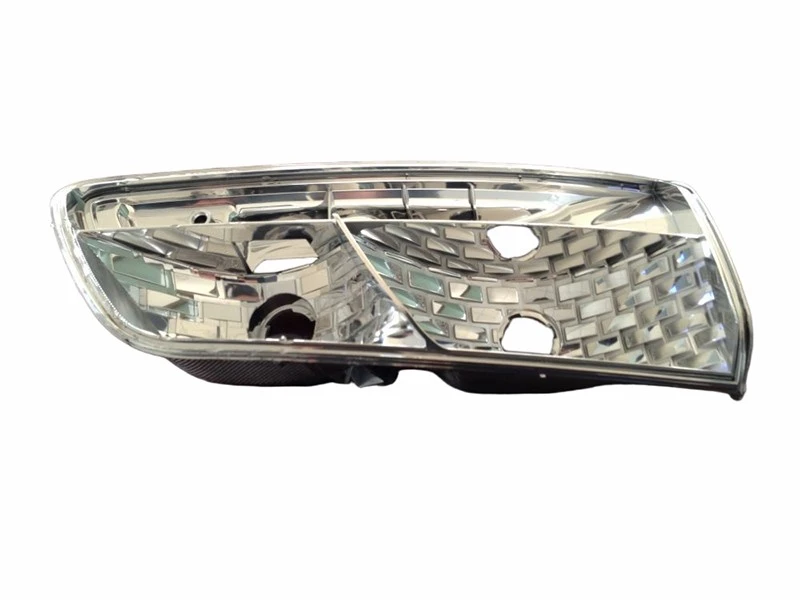
Similarly, the Auto Lamp Vacuum Metallizing Machine is used for metallizing auto lamp parts. These parts usually have complex shapes, which means that the substrate rotation needs to be very precise to ensure a high - quality finish.
In conclusion, controlling substrate rotation in a Vacuum Metalizer is a multi - faceted task. It involves choosing the right motor, transmission system, and sensors. It also requires careful consideration of the load, the vacuum environment, and the type of substrate. By following the tips and techniques I've shared in this blog, you can achieve a more consistent and high - quality metallization process.
If you're in the market for a Vacuum Metalizer or need more information on controlling substrate rotation, don't hesitate to reach out. We're here to help you find the best solution for your specific needs. Whether you're a small - scale manufacturer or a large industrial company, we have the expertise and the products to meet your requirements. Contact us today to start a discussion about your project and how we can assist you in achieving the perfect substrate rotation for your Vacuum Metalizer.
References
- "Vacuum Deposition Technology" by some author
- "Handbook of Vacuum Science and Technology" by another author


