


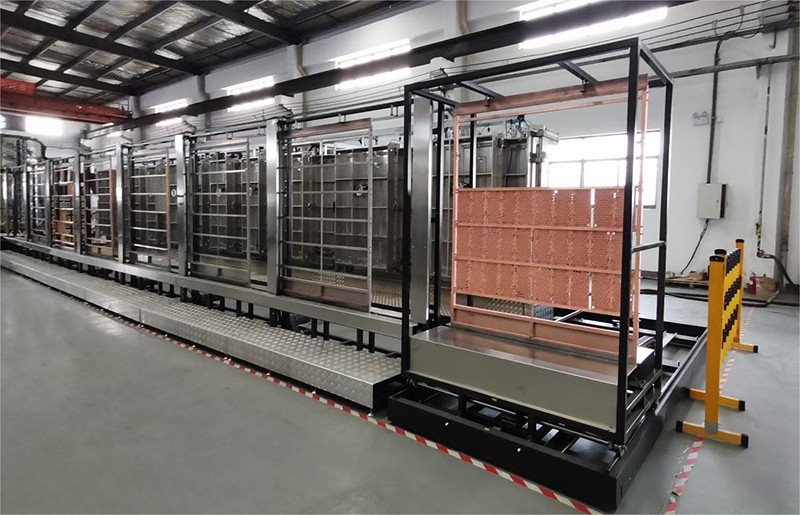
A continuous coating line is a sophisticated industrial setup designed to apply a consistent and uniform coating to various substrates in a continuous and efficient manner. As a leading supplier of continuous coating lines, I've had the privilege of working with a wide range of clients across different industries. In this blog post, I'll delve into the key components that make up a continuous coating line, explaining their functions and importance in the overall process.
Substrate Handling System
The substrate handling system is the starting point of any continuous coating line. Its primary function is to transport the substrate through the various stages of the coating process. This system typically consists of conveyors, rollers, and guides that ensure the substrate moves smoothly and precisely.
Conveyors are the backbone of the substrate handling system. They come in various types, such as belt conveyors, roller conveyors, and chain conveyors, each suited for different types of substrates and production requirements. Belt conveyors are ideal for handling flat and flexible substrates, while roller conveyors are better for heavier and more rigid materials.
Rollers and guides are used to support and align the substrate as it moves along the conveyor. They help prevent the substrate from shifting or wrinkling, ensuring a consistent coating application. In addition, some substrate handling systems may include mechanisms for loading and unloading the substrates, such as automated pick-and-place robots or manual loading stations.
Pretreatment Section
Before the coating can be applied, the substrate must be properly prepared to ensure good adhesion and a high-quality finish. The pretreatment section of a continuous coating line is responsible for cleaning, degreasing, and activating the substrate surface.
Cleaning is typically the first step in the pretreatment process. It involves removing any dirt, dust, oil, or other contaminants from the substrate surface. This can be achieved through various methods, such as solvent cleaning, aqueous cleaning, or abrasive blasting.
Degreasing is another important step in the pretreatment process, especially for substrates that have been exposed to oils or lubricants during manufacturing. Degreasing agents are used to dissolve and remove these contaminants, leaving the substrate surface clean and ready for coating.
Surface activation is the final step in the pretreatment process. It involves modifying the substrate surface to improve its adhesion to the coating. This can be achieved through various methods, such as chemical etching, plasma treatment, or corona treatment.
Coating Application System
The coating application system is the heart of a continuous coating line. It is responsible for applying the coating material to the substrate in a controlled and uniform manner. There are several types of coating application systems available, each suited for different types of coatings and substrates.
One of the most common types of coating application systems is the spray coating system. Spray coating involves atomizing the coating material into small droplets and spraying them onto the substrate surface. This method is suitable for applying a wide range of coatings, including paints, lacquers, and powders.
Another type of coating application system is the dip coating system. Dip coating involves immersing the substrate in a bath of coating material and then removing it at a controlled rate. This method is suitable for applying coatings to complex-shaped substrates or substrates with a high aspect ratio.
Roll coating is another popular coating application method. Roll coating involves applying the coating material to the substrate using a rotating roller. This method is suitable for applying thin and uniform coatings to flat substrates.
In addition to these traditional coating application methods, there are also several advanced coating application technologies available, such as Magnetron Sputtering Coating Line and Vertical Magnetron Sputtering Coating Line. These technologies use physical vapor deposition (PVD) techniques to deposit thin films of coating material onto the substrate surface. They are suitable for applying high-performance coatings, such as hard coatings, decorative coatings, and functional coatings.
Drying and Curing Section
After the coating has been applied, it must be dried and cured to achieve its final properties. The drying and curing section of a continuous coating line is responsible for removing the solvent or water from the coating and cross-linking the coating material to form a hard and durable film.
Drying is typically the first step in the drying and curing process. It involves removing the solvent or water from the coating by evaporating it. This can be achieved through various methods, such as air drying, oven drying, or infrared drying.

Curing is the final step in the drying and curing process. It involves cross-linking the coating material to form a hard and durable film. This can be achieved through various methods, such as thermal curing, ultraviolet (UV) curing, or electron beam (EB) curing.
The choice of drying and curing method depends on the type of coating material, the substrate, and the production requirements. For example, some coatings may require a long drying time at a low temperature, while others may require a short curing time at a high temperature.
Quality Control System
Quality control is an essential part of any continuous coating line. It ensures that the coated substrates meet the required quality standards and specifications. The quality control system of a continuous coating line typically consists of several components, such as sensors, cameras, and inspection stations.
Sensors are used to monitor various process parameters, such as temperature, humidity, coating thickness, and adhesion. They provide real-time feedback to the operators, allowing them to make adjustments to the process as needed to ensure consistent quality.
Cameras are used to inspect the coated substrates for defects, such as scratches, bubbles, or uneven coating thickness. They can be used to detect defects at various stages of the coating process, allowing for early detection and correction.
Inspection stations are used to perform more detailed inspections of the coated substrates. They may include equipment for measuring coating thickness, hardness, adhesion, and other properties. In addition, some inspection stations may include automated sorting systems that can separate the good and bad substrates based on their quality.
Post-treatment Section
The post-treatment section of a continuous coating line is responsible for performing any additional processes or treatments on the coated substrates. This may include processes such as polishing, buffing, or packaging.
Polishing and buffing are used to improve the surface finish of the coated substrates. They can be used to remove any minor defects or imperfections in the coating and to give the substrate a smooth and shiny appearance.
Packaging is the final step in the post-treatment process. It involves protecting the coated substrates from damage during transportation and storage. This may include wrapping the substrates in protective materials, such as plastic film or paper, or placing them in boxes or containers.
Automation and Control System
Automation and control systems play a crucial role in the operation of a continuous coating line. They ensure that the various components of the line operate in a coordinated and efficient manner, minimizing human error and maximizing productivity.
The automation and control system of a continuous coating line typically consists of a programmable logic controller (PLC), sensors, actuators, and a human-machine interface (HMI). The PLC is the brain of the system, responsible for controlling the various processes and functions of the line. It receives input from the sensors and uses this information to make decisions and control the actuators.
Sensors are used to monitor various process parameters, such as temperature, humidity, coating thickness, and adhesion. They provide real-time feedback to the PLC, allowing it to make adjustments to the process as needed to ensure consistent quality.
Actuators are used to control the various components of the line, such as the conveyors, pumps, valves, and heaters. They receive signals from the PLC and use these signals to perform their functions.
The HMI is the interface between the operators and the automation and control system. It allows the operators to monitor the process parameters, make adjustments to the settings, and view the status of the line. In addition, some HMIs may include features such as alarm management, recipe management, and data logging.
Conclusion
In conclusion, a continuous coating line is a complex and sophisticated industrial setup that consists of several key components. Each component plays a crucial role in the overall process, from substrate handling and pretreatment to coating application, drying and curing, quality control, post-treatment, and automation and control.
As a supplier of continuous coating lines, we understand the importance of providing our clients with high-quality equipment and solutions that meet their specific needs and requirements. Whether you're looking for a Magnetron Sputtering Coating Line, a Vertical Magnetron Sputtering Coating Line, or a Glass Continuous Coating Line, we have the expertise and experience to help you find the right solution for your business.
If you're interested in learning more about our continuous coating lines or have any questions about the coating process, please don't hesitate to contact us. Our team of experts will be happy to assist you and provide you with the information you need to make an informed decision.
References
- "Coating Technology Handbook" by Peter P. Klemchuk and Edward P. Plueddemann
- "Industrial Coating Systems" by Paul L. Manginell and John C. Berg
- "Surface Engineering for Corrosion and Wear Resistance" by David A. Jones


