


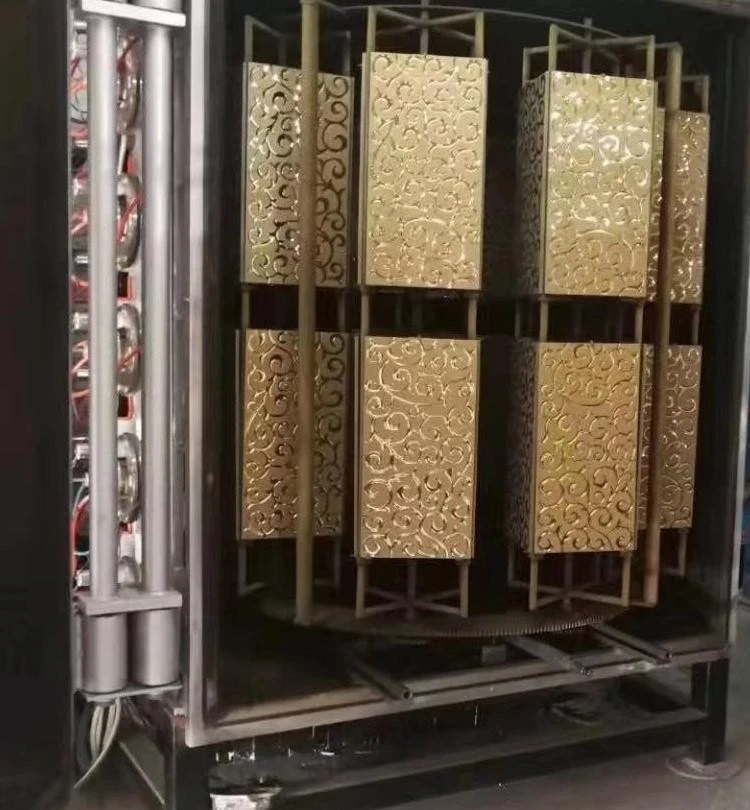
The coating growth rate of a Mold PVD (Physical Vapor Deposition) Coating Machine is a critical parameter that significantly influences the efficiency and quality of the coating process. As a leading supplier of Mold PVD Coating Machines, I am often asked about this topic. In this blog, I will delve into the concept of coating growth rate, its influencing factors, and its importance in the context of our machines.
Understanding Coating Growth Rate
The coating growth rate refers to the speed at which a thin film is deposited on the surface of a mold during the PVD coating process. It is typically measured in nanometers per minute (nm/min) or micrometers per hour (μm/h). This rate is crucial as it directly affects the production cycle time and the overall cost - effectiveness of the coating operation.
A higher coating growth rate means that the desired coating thickness can be achieved in a shorter period. For example, if a mold requires a coating thickness of 5 micrometers, a machine with a growth rate of 100 nm/min will take approximately 50 minutes to complete the coating, while a machine with a growth rate of 200 nm/min will only need 25 minutes. This reduction in time can lead to increased productivity, especially in high - volume manufacturing environments.

Influencing Factors of Coating Growth Rate
1. Target Material
The type of target material used in the PVD coating machine plays a vital role in determining the coating growth rate. Different materials have different vaporization rates under the same process conditions. For instance, metals like titanium and aluminum generally have relatively high vaporization rates, which can result in faster coating growth. On the other hand, some ceramic materials may have lower vaporization rates, leading to slower coating deposition. Our Hard Film PVD Coating Machine is designed to handle a variety of target materials, allowing for flexibility in achieving different coating growth rates depending on the application requirements.
2. Power Input
The power supplied to the PVD coating machine is directly related to the energy available for vaporizing the target material. Higher power input usually leads to more intense sputtering or evaporation of the target, resulting in a higher coating growth rate. However, there is a limit to how much power can be applied. Excessive power can cause overheating of the target, leading to uneven coating deposition and potential damage to the machine components. Our machines are equipped with advanced power control systems that allow for precise adjustment of the power input to optimize the coating growth rate while ensuring the stability of the coating process.
3. Gas Pressure
The gas pressure inside the coating chamber also affects the coating growth rate. In most PVD processes, an inert gas such as argon is used as a sputtering gas. A lower gas pressure generally results in a longer mean free path for the sputtered atoms, which can increase the probability of these atoms reaching the substrate surface and thus increase the coating growth rate. However, extremely low gas pressure can also lead to unstable plasma generation. Our machines are designed to maintain an optimal gas pressure range to ensure a consistent and efficient coating growth rate.
4. Substrate Temperature
The temperature of the substrate can influence the mobility of the deposited atoms on the substrate surface. A higher substrate temperature can enhance the surface diffusion of the atoms, allowing them to arrange themselves more efficiently and form a denser coating. This can sometimes lead to a slightly lower apparent coating growth rate in terms of thickness per unit time, but it can improve the quality of the coating. Our Ceramics PVD Coating Machine and Ceramic PVD Coating Machine are capable of precise temperature control to balance the coating growth rate and coating quality.
Importance of Coating Growth Rate in Mold Coating Applications
1. Cost - Efficiency
As mentioned earlier, a higher coating growth rate can reduce the production time, which in turn reduces labor costs and machine - running costs. In the mold manufacturing industry, where time is money, this can have a significant impact on the bottom line. By using our Mold PVD Coating Machines with optimized coating growth rates, customers can achieve cost - effective coating solutions without compromising on quality.
2. Coating Quality
Although a high coating growth rate is generally desirable for productivity, it is important to ensure that it does not come at the expense of coating quality. A well - controlled coating growth rate helps to achieve a uniform and dense coating, which is essential for the performance of the mold. For example, in injection molding applications, a high - quality coating can reduce friction, improve release properties, and increase the service life of the mold.
3. Process Flexibility
The ability to control the coating growth rate allows for greater process flexibility. Different mold applications may require different coating thicknesses and properties. Our machines can be adjusted to achieve a wide range of coating growth rates, enabling customers to meet the specific requirements of various mold - coating projects.
Measuring and Monitoring Coating Growth Rate
To ensure the consistency and quality of the coating process, it is essential to measure and monitor the coating growth rate. There are several methods available for measuring the coating thickness and growth rate, such as profilometry, ellipsometry, and X - ray fluorescence (XRF). Our Mold PVD Coating Machines can be integrated with these measurement systems to provide real - time feedback on the coating growth rate. This allows operators to make timely adjustments to the process parameters if necessary, ensuring that the coating meets the desired specifications.
Conclusion
The coating growth rate of a Mold PVD Coating Machine is a complex parameter influenced by multiple factors. As a supplier of high - quality Mold PVD Coating Machines, we understand the importance of optimizing this rate to meet the diverse needs of our customers. Our machines are designed with advanced technologies to provide precise control over the coating growth rate, ensuring both high productivity and excellent coating quality.
If you are interested in learning more about our Mold PVD Coating Machines or have specific requirements for your mold - coating projects, please feel free to contact us for a detailed discussion. We are committed to providing you with the best solutions and excellent customer service.
References
- Bunshah, R. F. (1982). Handbook of deposition technologies for films and coatings: science, applications, and technology. Noyes Publications.
- Martin, P. (2002). Physical vapor deposition (PVD) coatings for the metal - cutting industry. Surface and Coatings Technology, 154(1 - 2), 1 - 10.
- Sanders, W. A., & Weimer, A. W. (1997). Physical vapor deposition: science and technology. Springer.


